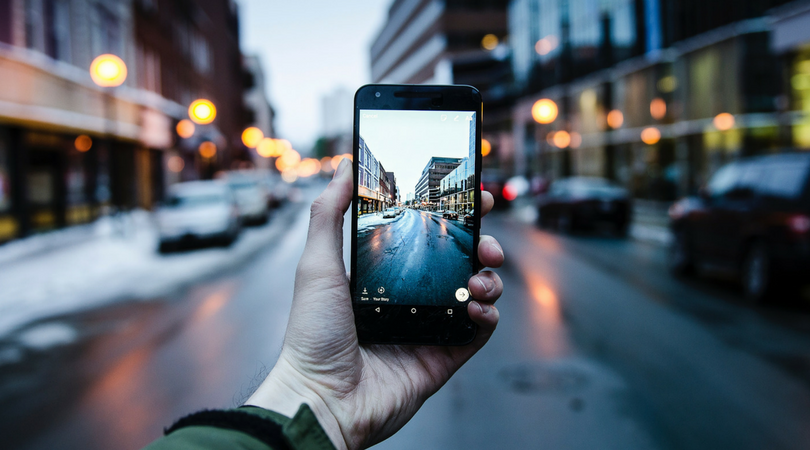
To assist you choose the best photos with your own phone, we have laid out ten useful hints we find ourselves using every day. With this knowledge in hand, you’ll be able to create some wonderful shots from a fairly limited though always improving camera platform.
Know Your Auto Mode
Knowing the way the automatic shooting mode on your smartphone camera works can help you take fantastic photos. Just take the time to learn when it utilizes high ISOs, as it utilizes long shutter speeds, and adjust how you shoot photographs accordingly. It especially helps to understand when the auto mode struggles, since you can then decide to override the default settings where appropriate.
Override the Defaults
Smartphones are better than ever when it comes to deciding on configurations automatically, but they do not always get it right. Metering in tricky circumstances, especially indoors and on overcast days, may still leave a lot to be desired, in spite of the best cameras in the marketplace.
If you think that the white balance or exposure is off, many smartphone cameras allow you to adjust these parameters into whatever you desire. White balance alterations often require a switch from auto to manual mode (where supported), but many cameras now encourage fine adjustments to color temperature.
The ideal manual modes allow you to change ISO and shutter speed also, allowing you to pick how much motion blur will be present on your pictures, and just how much grain will be visible. ISOs above 800 on a smartphone have a tendency to introduce noticeable grain, however, capture more light than lower ISOs. It is well worth playing around with these settings to obtain the best combination for the shots that you wish to attain, and the fantastic news is much more high-end phones than include these thorough manual modes.
If center-weighted metering isn’t supplying the correct results, you may also contemplating switching to spot-metering, which some cameras permit you to do. Center-weighted looks at the entire picture and meters based on that which it sees, with a preference on the center of the frame. When shooting areas off-center, it is sometimes a fantastic idea to switch to spot metering so the area around the’place’ you pick is exposed perfectly. Not every camera allows you to change this setting, however a handful that include detailed manual modes do come with a metering mode switch.
Take Numerous Shots
There’s plenty of storage on your smartphone, so for each shot that you want to absolutely nail, it’s worth taking a couple of photos in rapid succession. When photographing dynamic or fast-moving items — such as people, pets, automobiles, etc. — taking a number of photos will allow you to choose the best shot later, without worrying about getting that one ideal picture in the first shoot.
Even better, many smartphones provide neat burst photography attributes. Most will collect a succession of shots to one’photo’ and permit you to set whichever picture from the bunch is the very best shot. Some telephones will also analyse the photographs for you and pick out shots it believes will be the best, frequently looking at if everybody is grinning, or if the subject is in focus.
Edit
The final piece of this puzzle which often stops a photo captured using a smartphone from appearing truly awesome is the post-processing stage. All of the detail and necessary information has been recorded, but it may not look as vibrant as you’re after, or as sharp, or as beautiful.
It’s easy to fix this: chuck the photo from an editing program on your pc, such as Lightroom, or perhaps use an app on the device itself and start playing . After transferring a few sliders and ticking a few boxes, the results might astound you and your friends.
Capture in RAW
Capturing RAW photos ties in with the previous tip on editing. For many years now, DSLR users have been shooting in RAW to help with the editing procedure and get the absolute most from the shots. Today, a small handful of smartphones encourage RAW capture, so if you’re serious about editing, considering switching to RAW rather than fundamental JPG capture.
When you catch using JPG, aspects like white balance are baked in to the final shot, and detail has been lost in the compression procedure. The RAW format captures all, until white balance and other parameters are set, and without lossy compression. Editing using RAW images gives the maximum detail, and allows you to change things such as white balance and exposure with much less quality reduction relative to JPG.
While RAW is most effective for editing, photographs captured used in this arrangement are typically 3 to 5 times larger than their JPG counterpart. If storage space is an issue, RAW is not for you.
Use Great Posture
A key way of reducing blur is understanding how to hold a smartphone in a secure manner. Holding your arms outstretched or far from the body can make them sway more when photographing. Moving your elbows into the sides of the body can provide a bit of additional stability where required, as can physically resting the smartphone onto a stable object.
If you want perfect equilibrium, it is possible to acquire a tripod attachment that you can play with your smart phone into. You will probably seem a bit silly bringing a tripod out and about to utilize your phone, but we’ve seen and achieved some amazing shots using a tripod in your mind. Tripods are particularly useful in case your smartphone doesn’t include blur-reducing optical image stabilization (OIS), or when there is a manual manner which supports long-exposure photography.
From the original version of this guide, we advised users to never zoom using a smartphone but nowadays that advise isn’t always accurate. Most phones, such as the iPhone X and Samsung Galaxy Note 8, comprise secondary cameras which provide 2x optical zoom. There is no reason you shouldn’t use those cameras, as they provide an optical zoom with no loss of image quality.
Instead, that which we advise against is electronic zooming. This is exactly what occurs when you pinch or tap on most phone cameras: the telephone only enlarges and plants the output signal from the detector before the photo is recorded.
Know The Way To Use Portrait Mode
The last tip pertains to portrait modes, that are becoming increasingly more common in the last calendar year. Portrait modes attempt to simulate the greater background blur, or’bokeh’, available from DSLR cameras using wide-aperture lenses. Oftentimes this is accomplished via an extra detector that offers depth info, though phones like the Google Pixel 2 can simulate bokeh through smart edge detection and without additional hardware.
As portrait styles are a shallow depth-of-field simulation, in place of the actual deal, they’ve issues related to them. Edge detection isn’t always ideal, so that there are instances when you capture a photograph and areas are blurred that shouldn’t be. At other times, the blur does not seem natural, or appears closer to a Gaussian blur than a realistic lens blur. The trick to capturing good photos using portrait modes is knowing when the portrait style is likely to triumph, and as soon as it will battle.
And most important is would be to use a fantastic background, stuff, and places for photography.
 Click Photo